

What I Will Have to Answer For
Part II of Soft Love, Learned Late: on mothers, daughters, memory, harm, and the things we still have to face.

Content note: This essay discusses childhood neglect, abuse, motherhood, and intergenerational harm.
After I published Part I, I found the picture.
The lime green top. The pageboy haircut. The pose I remembered. The version of myself I thought might have been lost.
There she was.
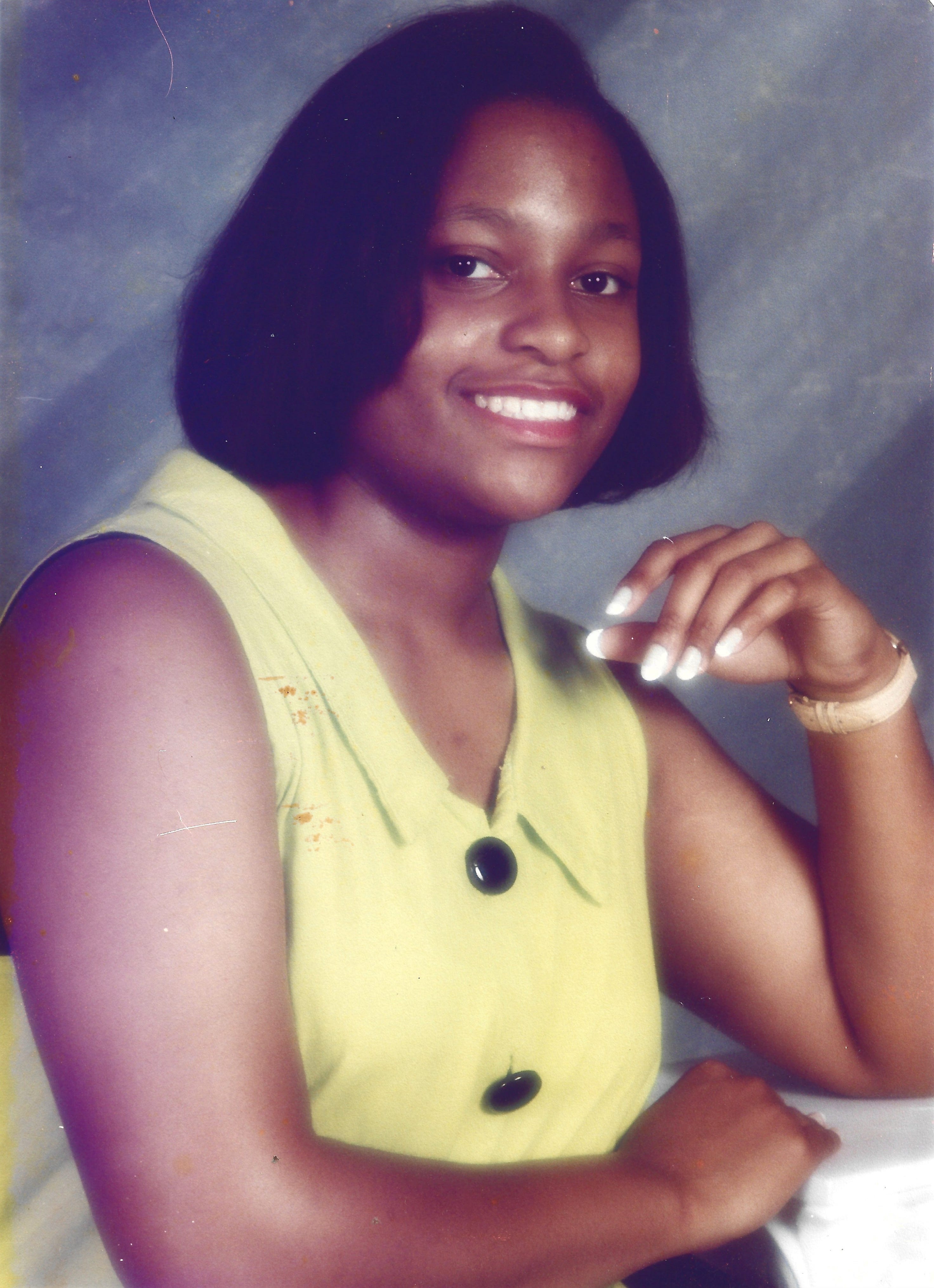
Me at eighteen, trying to capture something I had once seen in my mother.
Finding that picture made me go back and look at hers again.
There’s a part of me that wants to blame her. And there’s a part of me that doesn’t.
Because the truth is, I don’t know what she was given either. I don’t know what softness looked like for her. I don’t know if anyone ever slowed down long enough to see her the way I wanted to be seen. I don’t know if she had the space to question how she loved, or the language to name what was missing.
It was a different time. And not in the way people say that to excuse things, but in the way that shapes what people even believe is possible.
Looking at that picture now, I remember that she was eighteen. Or almost eighteen. Seventeen, turning eighteen that November.
It was 1962. Medgar Evers would be assassinated the following year. Malcolm X in 1965. Dr. King in 1968. The Civil Rights Act had not yet passed. The Voting Rights Act had not yet passed.
She was coming of age in a country that had not yet been forced, even legally, to stop pretending Black people were disposable. And I wonder what that does to a girl.
Not in theory. Not in a history-book way. I mean that girl. The one in the picture. The one looking directly into the camera like she already knew how to hold herself still.
What happens when survival becomes the first language you learn? When you are taught, directly or indirectly, that softness is dangerous, that fear must be swallowed, that tenderness is something to protect by hiding it?
What kind of woman does that girl become?
And what kind of mother?
I wonder if it silenced her in a way. If she learned to swallow fear before it could show. If softness felt like something she could not afford. If being seen too clearly felt dangerous.
I don’t know what was going on in her mind then. I don’t know what she feared. I don’t know what she hoped for. I don’t know if anyone ever gave her room to be afraid.
By the time she had me, the story I heard most often was the emergency: I was premature. My umbilical cord was wrapped around my neck. Something almost went wrong before I even had language. But I don’t know if anyone held her through that. I don’t know if her mother showed up. I don’t know if anyone said, You must have been terrified.
She never told me.
She never showed it.
And maybe that was part of what she learned too.
I can hold the context of her life without erasing the harm in mine. There were things she did that I can understand now, but understanding does not make them harmless. Some of it was neglect. Some of it was abuse. And naming that does not mean I am blaming her for everything. It means I am finally telling the truth without flinching.
So I can’t sit here and pretend she had tools she may have never been given. But I also can’t pretend that I don’t have them now.
Because I do.
I’ve had time. I’ve had distance. I’ve had experiences that made me stop and ask myself why I respond the way I do. And once you start asking that question—once you really sit with it—you don’t get to unknow the answer.
That’s the part that belongs to me. Not what I was given, but what I do with it.
I can understand where something comes from and still decide it’s not how I want to move forward. I can recognize a pattern and choose not to repeat it. That doesn’t erase anything, but it does change what comes next.
There’s also a part of me that learned a long time ago that I will have to answer for the things and decisions I’ve made to my children, if not anybody else.
Respectfully.
Not because I believe mothers should disappear inside their children. Not because I believe martyrdom is the price of love. I don’t believe that. I can’t believe that. There were times I had to choose myself because no one else was going to choose me, and because disappearing would not have made me a better mother. It only would have made me more resentful, more exhausted, more absent in ways nobody would have named until much later.
But I also know that choosing myself did not happen in a vacuum.
My children experienced those choices in real time. Not as intention or survival strategy. Not as a woman trying to claw her way back to herself. They experienced me as I was. And whatever that was—whatever I gave, whatever I missed, whatever I didn’t yet understand—that is what they lived.
I don’t get to rewrite that. I don’t get to soften it after the fact just because I know more now. I don’t get to say, But I was doing my best, and expect that to answer every ache.
I think about a conversation I had with my mother once as an adult. I remember us passing by a train station, though I don’t remember where we were going. I tried to talk to her about some of the choices she made. Not to put her on trial. Not to make her answer for everything. Just to name that some things stayed with me.
Like the times she put me out.
Once, when I was six or seven, she locked me out of the house. I remember going across the street to the little park near our apartment complex. I sat on the swing and cried because I was terrified and didn’t know what to do.
Things like that linger.
When I tried to talk to her about it, she said, “I did the best I could with what I had.”
And I didn’t counter it. I didn’t ask her to defend it. I let that be her truth.
But now I understand something I didn’t understand then: her truth does not cancel out mine.
She may have done the best she could with what she had. And I was still a child locked outside, afraid, trying to figure out where to go.
Both things can be true.
That is what I have to remember when my own children come to me with their version of the story. I may want to explain. I may want to defend myself. I may want to tell them what I was carrying, what I was surviving, what I was trying to do.
But before I defend myself, I want to learn how to open the door.
Because sometimes my best may have still hurt them.
Sometimes my choices may have confused them. Sometimes my distance may have felt like rejection. Sometimes my silence may have sounded like indifference.
Sometimes the ways I was trying to survive may have looked, to them, like I was choosing something or someone else.
And maybe sometimes I was.
That is a hard sentence to write. But it is probably the truest one.
I have made choices I am proud of. I have made choices I would make again. I have made choices that gave me room to breathe, to become, to stop living like my own life was an afterthought.
And I have made choices that I may have to answer for.
Both things can be true.
I can love my children and still admit I did not always know how to mother from softness. I can know that I was carrying my own wounds and still recognize that my wounds did not make me harmless. I can understand myself without excusing myself.
That is the difference I am trying to learn now.
Not perfection. Not performance. Not pretending I finally know how to love correctly.
Just the willingness to notice. To listen. To stay present when the answer is uncomfortable. To not make my children responsible for reassuring me that I did okay.
If they ever come to me with their version of the story, I want to be able to hear it without reaching immediately for my defense. I want to be able to say, I understand why that hurt you, even if I remember the moment differently. I want to be able to hold the truth that love was there and still recognize that something else may have been missing.
That is a hard place to stand.
Because it means holding two truths at once: that I did the best I could with what I had, and that my best may not have always felt like enough to them.
Both things can be true.
And neither one cancels the other out.
Maybe that is where soft love begins. Not pretending we were given everything we needed, or that we gave everything perfectly. But in what we are willing to notice now.
And what we choose to do next.